
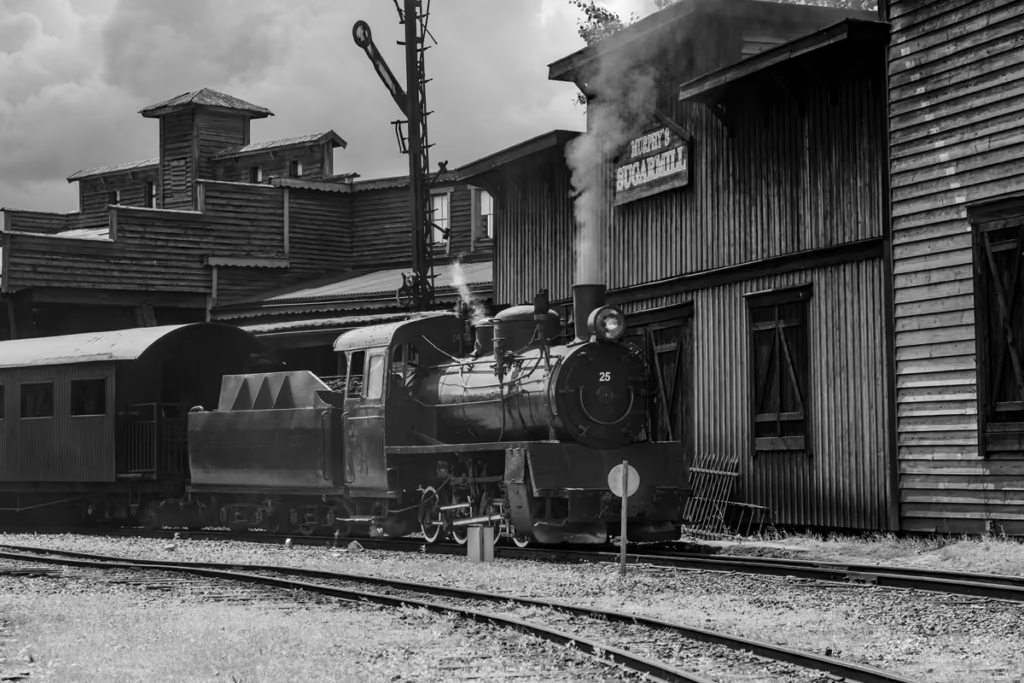
In the fall of 1854 a small party of New York children stepped off a train in Dowagiac, Michigan. There were about forty-five of them, traveling with an agent of a young charity called the Children’s Aid Society. Within days most had been taken into local homes. Nobody called it an orphan train yet. The phrase came much later, from historians and from the riders themselves, once there were enough of them to look back.
For the next seventy-five years the same scene would repeat in hundreds of towns. By the time the last parties rode in 1929, an estimated 200,000 to 250,000 children had been placed this way. Some found families who loved them. Some found work and little else. Most found something in between, which is what makes their stories so hard to tell in a single sentence.
Why New York sent its children west
New York in the 1850s was crowded past the point of coping. Immigration was heavy, wages were low, and disease took parents young. Thousands of children slept in doorways, sold newspapers, or picked up what work they could. Charles Loring Brace, a minister who founded the Children’s Aid Society in 1853, believed the cure was not another institution but a family. In his view a farm household in Ohio or Illinois needed hands, and a city child needed a home. Put the two together, he reasoned, and both would be better off.
It was an idea with real kindness in it and real blind spots. Brace and his agents believed rural life would remake a child. They also tended to see poor immigrant parents, especially Catholic ones, as a problem to be solved. Both beliefs shaped who was sent and where.
How a placement worked, step by step
The method changed over the decades, but the bones of it stayed steady.
- The notice. Weeks before a party arrived, a local committee of townspeople, often a minister, a newspaper editor and a merchant or two, agreed to host. Handbills went up and the local paper ran a notice that homeless children would arrive on a given date.
- The journey. Agents traveled with the children, usually in ordinary passenger cars. A party might stop in several towns along one line.
- The gathering. On arrival day the children were brought to a church, a courthouse, a hotel parlor or an opera house. Families who had applied, and some who simply turned up, came to meet them.
- The choosing. This is the part riders remembered longest. Children stood, answered questions, and were looked over. Older boys were often chosen for farm work; babies and small girls, for adoption into the family.
- The agreement. The committee approved each placement. Terms varied, but families usually promised to feed, clothe and school the child, and to bring them up as one of their own.
- The follow-up. Agents were meant to visit or write afterward and could move a child who was mistreated or unhappy. In practice, visits were uneven, and many children did not see an agent again for years.
Some found families who loved them. Some found work and little else.
Not all of them were orphans
The name is misleading. Many riders had at least one living parent who could not keep them, or a relative who had surrendered them during hard times. Some families signed papers believing the separation would be temporary. Others had little say at all. For descendants doing research today, this matters a great deal: the records often point back to a living family in New York that the rider never knew about.
The Catholic trains
In 1869 the Sisters of Charity opened the New York Foundling Hospital, and before long it was sending children west as well. Its system worked differently. Instead of a public gathering, Catholic families applied in advance through their parish, and each child traveled with a tag naming the family who had already agreed to take them. These parties are sometimes called baby trains or mercy trains, and many of their riders were very young.
How many, and where
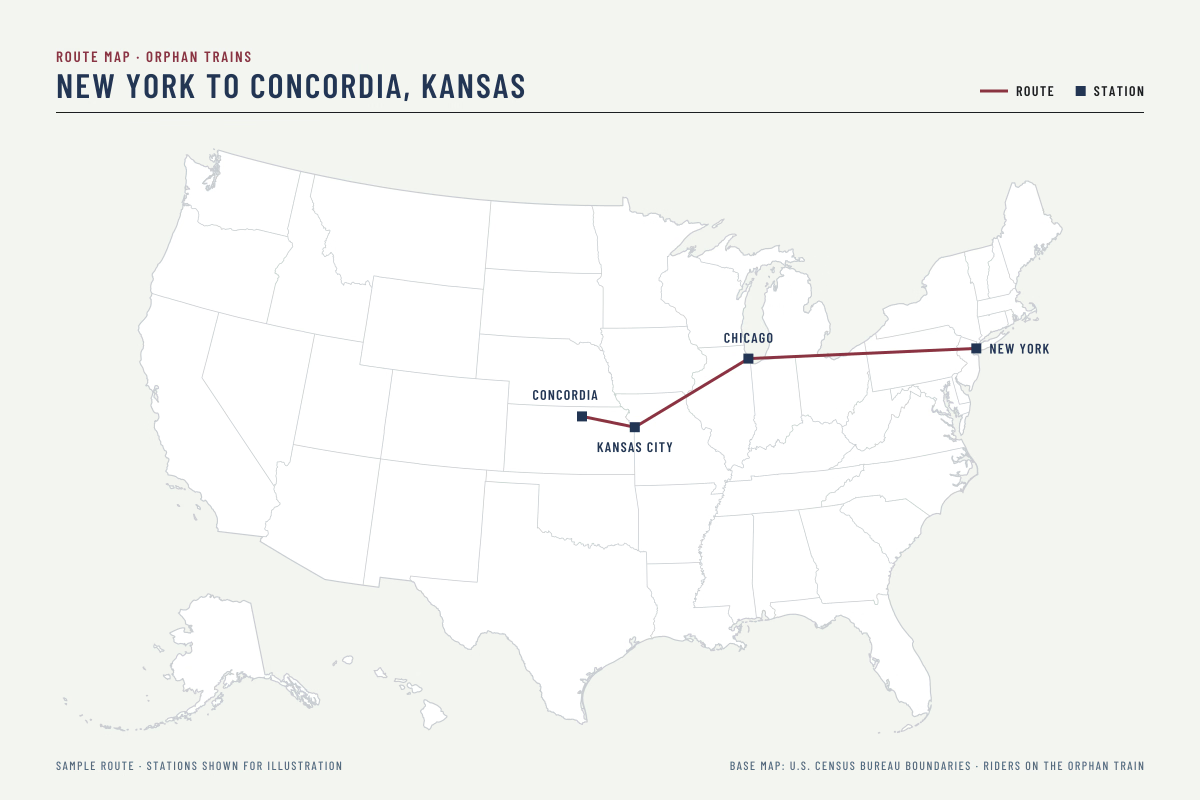
Children were placed in nearly every state at one time or another, along with parts of Canada. The heaviest flows went to the farm states of the Midwest: Michigan, Ohio, Indiana, Illinois, Iowa, Missouri, Kansas and Nebraska. Texas and the South received parties too, especially later. Other cities ran their own placing-out programs, so not every rider came from New York, though most of the famous parties did.
Why it ended
Several things wore the system down at once. States began passing laws to regulate children brought in from elsewhere, partly out of concern that cities were exporting their problems. Social workers grew more professional and more skeptical of placing a child with strangers after a single afternoon. New ideas took hold about keeping children with their own families when poverty was the only problem. By the late 1920s the parties had dwindled, and the last of them rode in 1929.
What it left behind
The children grew up, married, farmed, taught school, served in two world wars and raised families of their own. Many said little about how they came to their towns. Some told the story only in old age, after groups of former riders began meeting late in the twentieth century to share what they remembered.
What remains today is scattered but rich: placement records in New York archives, local newspaper notices, county court files, letters kept in family Bibles, and a museum in the old Union Pacific depot in Concordia, Kansas, devoted to the riders. If one of them is in your family, the trail is usually still there. It runs through more than one archive, and it takes patience. For a broad overview of the whole movement, with its dates and agencies in one place, the Orphan Train article on Wikipedia is a good starting point.