
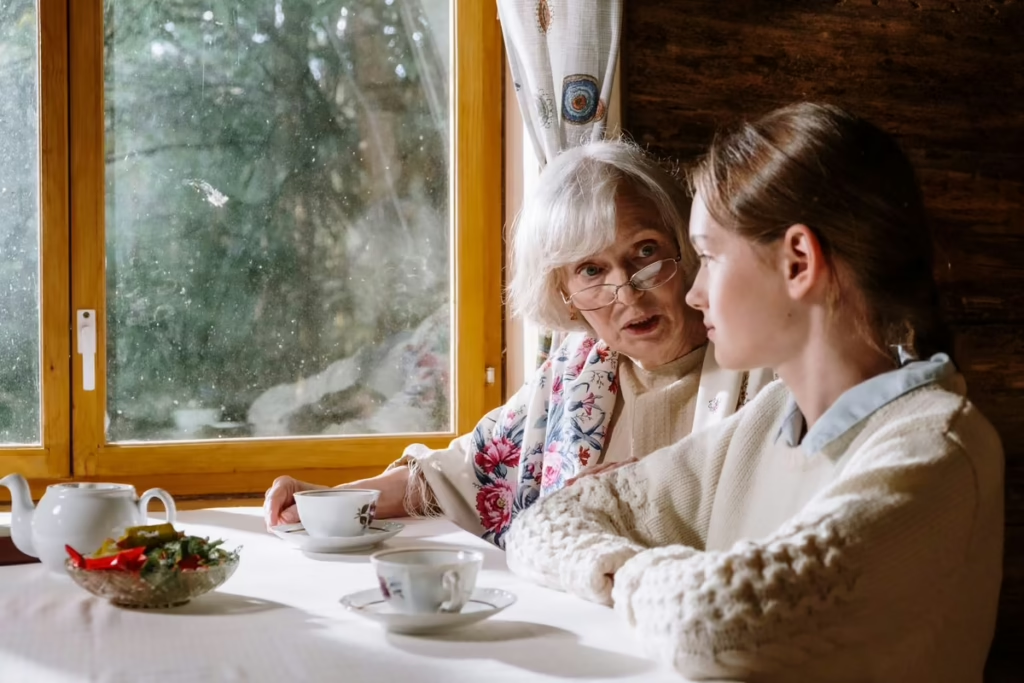
The first time I sat my grandmother down to “do an interview,” I came with a notebook, a recorder and forty questions. She answered the first three in a sentence each and then told me she didn’t remember much. I thought I’d failed. It took me another year of visits to understand that she remembered plenty. I’d just asked about dates when she wanted to talk about kitchens, dances and the cousin who could whistle through two fingers.
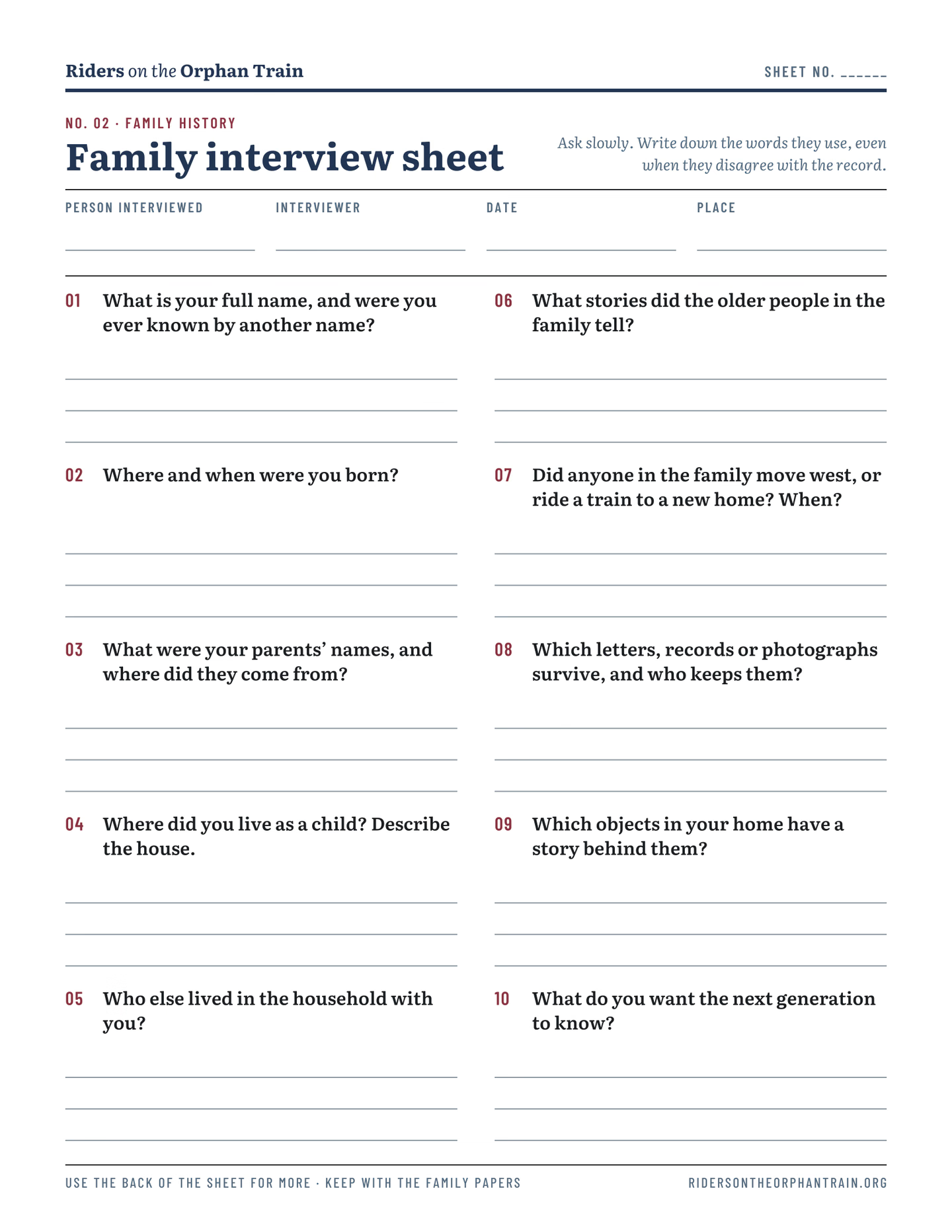
These are the questions that finally worked, in my family and in the families of readers who have written to us since. Use them as a starting point, not a script.
How to ask, before what to ask
- One topic per visit. Childhood one Sunday, work the next. A short conversation that goes deep beats a long one that skims.
- Bring something to hold. A photograph, a recipe card or an old report card does more than any question. People remember through objects.
- Ask “tell me about,” not “did you.” Yes and no questions get yes and no answers.
- Follow the tangent. If a question about school turns into a story about a flood, let it. The flood is the story.
- Record with permission, and say why. “I want the grandkids to hear your voice” lands better than “for my research.”
- Go back. The second conversation about the same topic is almost always better than the first.
Childhood and home
- Tell me about the house you grew up in. What did the kitchen look like?
- What chores did you have, and which one did you hate?
- What did your family do on a Sunday?
- Who lived nearby that you visited often?
- What did you eat on a birthday?
- Was there a smell or a sound that meant home?
School and growing up
- How did you get to school, and how long did it take?
- Which teacher do you still think about?
- What did you and your friends do when no adults were watching?
- What did you want to be when you grew up?
Work and money
- What was your first job, and what did you buy with the first pay?
- What work were you proudest of?
- Were there hard years when money was tight? How did the family get through?
Love and family
- How did you meet Grandpa or Grandma, and what did you think at first?
- What was your wedding day like? What went wrong?
- What was it like when your first child was born?
- What do you wish someone had told you about being a parent?
The people before them
- What do you know about your own grandparents?
- Where did the family come from before here, and why did they leave?
- Were there stories the older folks told that you never understood?
- Was there anyone in the family people didn’t talk about?
Places and big events
- Where were you when you heard about the biggest news of your youth?
- Did a war, a flood or a hard winter change the family’s plans?
- Which town or house would you visit again if you could?
Things and keepsakes
- Which object in this house has the best story behind it?
- Is there something you wish you had kept?
- Who should have the family photographs one day?
Looking back
- What are you proudest of?
- What changed the most in your lifetime?
- What do you want the grandchildren to know about you that they might not?
After the conversation
Write down what you heard the same day, while it’s fresh, including the exact phrases. “We were poor but we had a piano” is worth more than any summary of it. Note names and places to check later in records, but don’t correct the story while you’re listening. Memory and the record don’t always agree, and both are worth keeping.
My grandmother never did give me a date for anything. She gave me the cousin who whistled, the dance hall that burned and the taste of her mother’s rhubarb pie. I wouldn’t trade them for a hundred dates.