
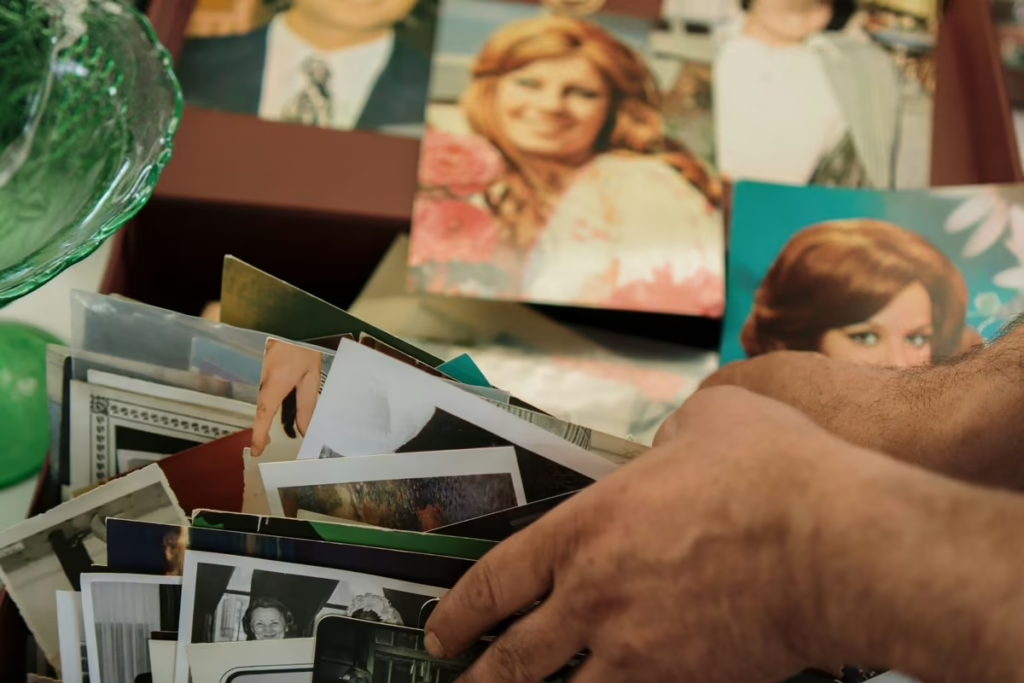
After thirty years of teaching and another ten helping neighbors with their family trees, I have noticed that beginners make the same mistake. They start online, type a great-grandfather’s name into a search box, and spend a month chasing the wrong man with the same name. The better start is slower and cheaper. It begins at home.
Here is the weekend plan I give anyone who asks me how to find their ancestors.
Saturday morning: the house sweep
Set aside three hours and go through every place family papers hide. Don’t read everything closely yet. Just gather.
- The family Bible, including the pages in the middle where births, marriages and deaths were written.
- Baby books, school report cards and diplomas.
- Funeral cards and newspaper obituaries clipped and tucked into drawers.
- Military discharge papers, ration books and draft cards.
- Naturalization certificates and passports.
- Deeds, wills, insurance policies and old tax receipts.
- Letters and postcards, especially the envelopes, which carry addresses and postmarks.
- Photographs, and above all the backs of photographs.
Put everything in one place, on one table, and resist the urge to start sorting.
Saturday afternoon: write it down before you interpret it
Open a notebook or a simple spreadsheet and record each item: what it is, whose it was, every name, date and place it mentions, and where you found it. This becomes your research log, and it will save you more time than any website. Copy names exactly as written, misspellings and all. A clerk’s odd spelling in 1912 may be the very version you need to search later.
Sunday morning: talk to the oldest relative you can reach
Call or visit the oldest person in the family and bring three or four items from the table. Photographs work best. Ask who is in them, where they were taken, and what the person remembers about that house or that town. Write down the answers or, with permission, record the conversation. Ask for names of other relatives who might know more. One good afternoon with a great-aunt can fill in a generation.
Sunday afternoon: your first census search
Now go online, with your notes beside you. Start with the most recent census that is open to the public, the 1950 census, released in 2022, and find your parents or grandparents in it. Then work backward one decade at a time, 1940, 1930, 1920, using what each census tells you to find the one before it. Every household gives you ages, birthplaces and sometimes the year a family arrived in the country.
Free indexes and images are available through the big genealogy websites, and most public libraries offer free access to the paid ones on their own computers. Ask at the reference desk.
Rules that will save you
- Work from the known to the unknown. Prove each generation before you leap to the next.
- One person, many spellings. Search variations of surnames and first names, and try initials.
- Two sources before you believe it. A family story is a clue, not a fact, until a record agrees with it.
- Keep the log going. Note what you searched and found nothing. You’ll thank yourself.
Where to go after the first weekend
Once the census trail is solid, move on to birth, marriage and death records from the county or state, church registers, city directories and local newspapers. Each of those deserves its own weekend. But the habit from this first weekend is the one you’ll use every time: gather, record, check.